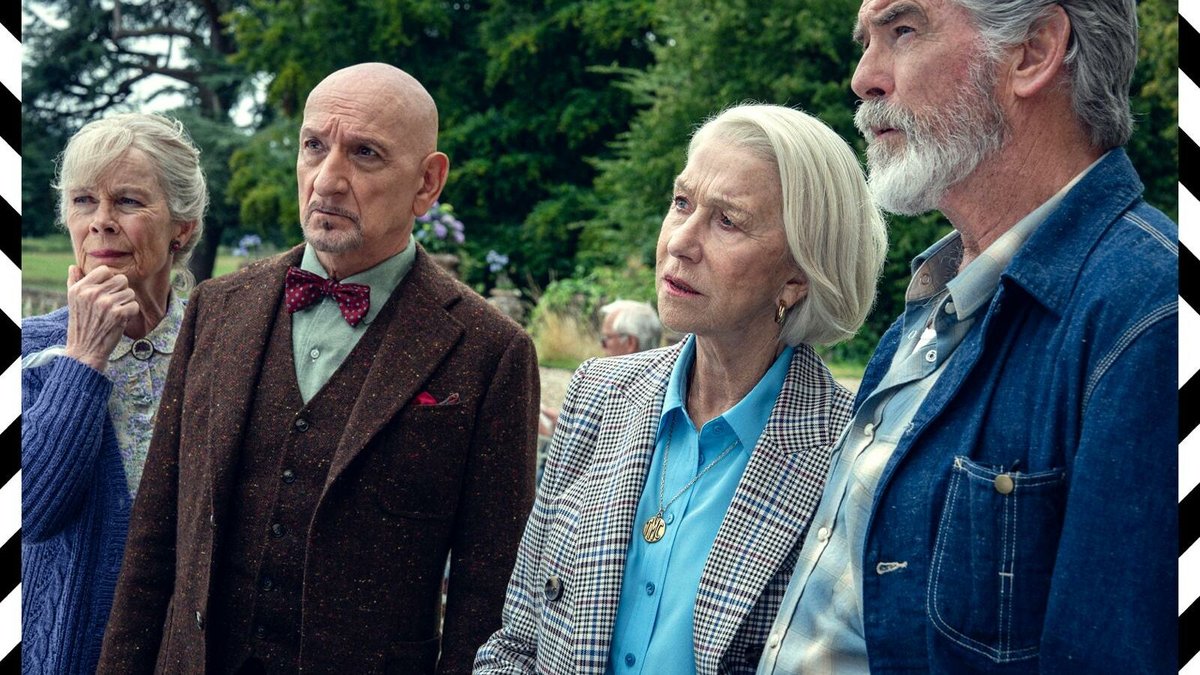
Some stories are simply too good to tell just once. They resonate, they linger, and they beg for new interpretations. This enduring truth is why Major Film and TV Adaptations have become a cornerstone of modern entertainment, frequently outshining their source material to become cultural touchstones in their own right. From gritty novels to beloved cinematic features, the journey to the small screen isn't just about recreating; it's about reimagining, deepening, and sometimes, revolutionizing.
The belief that the original is always superior is a common one, but the evidence increasingly points to a different conclusion. Television, with its expansive canvas and serialized storytelling, offers a unique opportunity for narratives to breathe, for characters to evolve, and for worlds to unfurl with an intricacy that a two-hour film rarely permits. This isn't to diminish the brilliance of original creators, but rather to celebrate the alchemical process where a strong foundation meets visionary adaptation, yielding something truly extraordinary.
At a Glance: Why Adaptations Often Shine Brighter
- Expanded Canvas: TV series provide more time to develop characters, plotlines, and world-building than films.
- Deeper Exploration: Complex themes and nuanced relationships can be explored with greater depth over multiple seasons.
- Modern Relevance: Adaptations can update classic stories, addressing contemporary issues or sensibilities.
- New Perspectives: Creative teams often bring fresh angles or expand on secondary characters, enriching the original narrative.
- Refined Storytelling: Lessons learned from the original can inform and improve the pacing, structure, and emotional impact of the adaptation.
- Talent Magnet: Successful IPs attract top-tier writers, directors, and actors, elevating production quality and performance.
Why We Adapt: The Enduring Power of a Good Story
Studios aren't just looking for a quick buck when they greenlight an adaptation; they're betting on a proven commodity. An established book or film comes with a built-in audience, a pre-tested concept, and often, a passionate fan base eager to see their favorite story brought to life in a new way. This reduces risk in a highly competitive industry. But the true magic happens when creators see beyond mere replication, recognizing an opportunity to do more than just translate. They see potential for expansion.
Consider the sprawling narratives found in many beloved novels. A novel can delve into a character's internal monologue for chapters, explore historical backdrops in meticulous detail, or weave together multiple complex storylines. A single film, constrained by its runtime, often has to prune these elements drastically. Television, however, thrives on this very complexity. It's built for the long game, allowing narratives to unfold organically and characters to undergo profound, believable transformations over dozens of hours. This is where the adaptation often finds its strength, taking the seed of a great idea and nurturing it into a towering oak.
The Television Advantage: Room to Breathe and Grow
The episodic nature of television is perhaps its greatest asset when it comes to adaptation. Where a movie provides a snapshot, a TV series offers an entire photo album, filled with moments of growth, conflict, and quiet introspection. This extended format is crucial for building empathy, understanding motivations, and immersing audiences deeply into a fictional world.
From Screen to Series: When Movies Get a Second Life (and a Better One)
The transition from a beloved film to a television series can be fraught with peril. Fans are often fiercely protective of their originals. Yet, many TV adaptations have not only navigated these expectations but soared past them, proving that some stories truly benefit from a longer telling.
- MASH (1972-1983): Robert Altman's 1970 film was a groundbreaking anti-war black comedy. The TV show not only replicated its cutting satire but expanded its universe over 11 seasons, turning its characters into household names and its finale into one of the most-watched broadcasts in American history. Its longevity and cultural impact were unparalleled, deepening the original's message through consistent character development and poignant storytelling.
- Buffy the Vampire Slayer (1997-2003): Joss Whedon's 1992 film had a cult following, but his TV series transformed the concept. It became a powerful metaphor for the horrors of adolescence, crafting rich characters and complex relationships that resonated deeply with a generation, cementing its status as a massive '90s cultural hit.
- Fargo (2014-present): Noah Hawley's brilliant anthology series riffs on the Coen Brothers' 1996 masterpiece, capturing its unique blend of dark humor and brutal crime. Each largely standalone season delivers a new, compelling narrative, consistently earning praise for its "good, weird, and unique" approach, often standing on par with, if not surpassing, the original film's artistic merit.
- Cobra Kai (2018-2025): This continuation of The Karate Kid film series wasn't just a nostalgic trip; it ingeniously flipped the script, exploring Daniel LaRusso as a potential bully and Johnny Lawrence as a sympathetic figure. This fresh perspective breathed new life into the franchise, leading to multiple successful seasons by deepening the characters and their intertwined histories.
- Westworld (2016-2022): HBO's adaptation of Michael Crichton's 1973 film took the core idea of androids in a theme park and spun it into a sprawling, philosophical epic. It brought the concept into the modern era, sparking intense debates about AI, consciousness, and autonomy, making the original feel less like a precursor and more like a proof-of-concept for its much grander successor.
- Hannibal (2013-2015): Bryan Fuller's take on Thomas Harris's characters managed to stand out in a crowded field of adaptations. With stunning cinematography and mesmerizing performances from Mads Mikkelsen and Hugh Dancy, it maintained the movies' signature creep factor and twists while elevating the aesthetic to an art form, making every frame a masterpiece of suspense and psychological horror.
- Parenthood (2010-2015): Based on the 1989 Ron Howard film, this Jason Katims drama expanded the universal themes of parenting across multiple generations of the Braverman family. Its strength lay in its authentic portrayal of family dynamics, often showcasing the messy, beautiful complexities of life with an emotional depth rarely achieved on television.
- Stargate SG-1 (1997-2007): Picking up where Roland Emmerich's 1994 Stargate film left off, the series introduced a new cast and explored the vast, unknown universe beyond the Stargate for a full decade. It built a loyal fanbase and created a rich mythology that far surpassed the scope and narrative possibilities of its cinematic predecessor.
- What We Do in the Shadows (2019-present): This FX series masterfully transitioned the cult comedy movie into a critically acclaimed and audience-favorite series. It captured the mockumentary style and humor of the original while developing a cast of hilariously incompetent vampires whose antics have kept viewers laughing for years, proving some concepts just get funnier with more screen time.
- Friday Night Lights (2006-2011): Originating from a book and then a movie, the TV show truly hit its stride. It was widely praised for its authentic portrayal of small-town life, sports, and community, with its motto "Clear eyes, full hearts, can't lose" becoming iconic, far outliving the film in cultural memory and critical acclaim.
Page to Screen: How Books Find New Life (and Sometimes Perfection) on Television
Books, with their inherent narrative depth, are arguably even more suited for television adaptation than films. They provide a rich tapestry of characters, settings, and storylines that can be meticulously translated and expanded upon over multiple seasons. The challenge lies in capturing the essence of the source material without being slavishly devoted to it, finding that delicate balance between fidelity and creative interpretation.
Masterful Literary Adaptations That Define a Genre
The current landscape of television is rich with adaptations born from literature, many of which have not only captured the spirit of their source but have enhanced it through stunning visuals, powerful performances, and insightful narrative choices.
- Shōgun (2024 series): Based on James Clavell's 1975 novel, this epic adaptation has set a new benchmark for historical war dramas. Its stunning sets, exquisite locations, and remarkably realistic dialogue arguably realize the medieval Japanese setting even better than the reader might have imagined. With a second season reportedly in development, its meticulous attention to detail and powerful storytelling have captivated a global audience.
- Bosch (2014-present): Michael Connelly’s Harry Bosch series found its true home on Amazon Studios. With Connelly himself involved as a screenwriter and Titus Welliver embodying the titular detective, Bosch (and its continuation Bosch: Legacy) has consistently surpassed its literary source. Across 10 seasons, it has brought neo-noir crime drama to the masses, building a complex world that feels utterly authentic.
- The Outsider (2020): Stephen King's 2018 novel found a perfect match in this HBO miniseries. It replicated the dark, disquieting tone of the book with uncanny precision, elevated by extraordinary performances, particularly Cynthia Erivo as Holly Gibney and Ben Mendelsohn as Ralph Anderson. The adaptation amplified the psychological horror, proving how visual storytelling can deepen the chill of the written word.
- Sharp Objects (2018): Gillian Flynn's 2006 novel was a stylish thriller, and the HBO miniseries enhanced its Southern Gothic and noir aesthetics perfectly. Amy Adams delivered a sensational performance as Camille Preaker, while Marti Noxon and director Jean-Marc Vallée developed the book's brilliance further, adding layers of visual storytelling and psychological intensity.
- Orange Is the New Black (2013-2019): Piper Kerman's 2006 memoir served as the springboard for this groundbreaking Netflix original. The series expanded the real-life story into a warmer yet darker comedy-drama, creating a vibrant world filled with unforgettable characterizations like Poussey Washington and Lorna Morello. It explored the harrowing realities of prison life with humor and pathos, proving the power of fiction to illuminate truth.
- The Night Manager (2016): John Le Carré’s 1993 novel was adapted into a British miniseries that turned Tom Hiddleston into a major star and showcased Hugh Laurie at his absolute best. This elegant spy thriller was so successful that new seasons are returning, cementing Hiddleston as a frontrunner for the James Bond role, a testament to the adaptation's magnetic appeal.
- The Leftovers (2014-2017): Based on Tom Perrotta’s 2011 novel, this supernatural series took an ingenious premise – 2% of the world's population vanishes – and made it resonate profoundly. It offered a heavy emotional load, exploring grief and meaning with mesmerizing performances from Justin Theroux and Carrie Coon, developing the philosophical depth of the book into a truly unique television experience.
- Normal People (2020): Sally Rooney’s 2018 novel was reinforced in its brilliance by this Irish-produced miniseries. Across 12 episodes, it remained remarkably grounded and faithful, translating Rooney's poignant insights into young adulthood onto the screen with raw honesty and an intimate sensibility that captivated critics and audiences alike.
- Roots (2016 version): Alex Haley's 1976 novel, and its iconic 1977 miniseries adaptation, received a powerful 2016 remake. Starring Forest Whitaker and Laurence Fishburne, this version raised the bar for historical dramatization, offering a deeper and more unflinching portrayal of slavery from the African American perspective, leveraging modern storytelling techniques to amplify its powerful message.
- Game of Thrones (2011-2019): While its later seasons became controversial, Game of Thrones, based on George R. R. Martin’s A Song of Ice and Fire series, faithfully adapted its source material for its first four seasons. Martin himself wrote four episodes, ensuring its quality. However, as the writers moved beyond the direct novel storylines from season 5 onwards, its quality famously declined, illustrating the crucial importance of strong source material and careful stewardship.
The Magic Formula: What Makes an Adaptation Truly Great?
So, what are the common threads woven through these successful adaptations that allow them to not just replicate, but often surpass their originals?
- Respect the Core, Dare to Evolve: The best adaptations understand the essence of the source material – its themes, characters, and tone – but aren't afraid to take calculated risks. They know when to expand a storyline, introduce a new perspective, or even update a character for a modern audience, all while maintaining the spirit of the original.
- Casting Excellence: A visionary showrunner and a brilliant script can only go so far without the right actors. The performances of a Mads Mikkelsen as Hannibal, an Amy Adams as Camille Preaker, or a Titus Welliver as Harry Bosch are not just interpretations; they become definitive portrayals that elevate the material.
- Visionary Showrunners and Writers: The individuals steering the ship are paramount. Creators like Bryan Fuller (Hannibal), Noah Hawley (Fargo), Jason Katims (Parenthood), and Marti Noxon (Sharp Objects) bring a unique authorial voice that transforms the source into something new and compelling, without losing its identity.
- Embracing TV's Episodic Nature: Instead of simply stretching a movie into multiple episodes, successful TV adaptations leverage the format. They use the extended runtime to build complex subplots, explore character arcs with greater nuance, and allow tension to simmer over weeks or months, creating a richer, more immersive experience.
- Understanding Enduring Archetypes: Some stories and characters are so fundamental that they can be reinterpreted across generations and media, always finding new relevance. Think of the timeless struggle between good and evil, nature versus civilization, or the hero's journey. Classic figures like Jane and Tarzan, for instance, have seen countless adaptations over the decades, each reflecting its era while grappling with core themes of wilderness, discovery, and human connection. Exploring All about Jane and Tarzan reveals just how deeply ingrained and endlessly adaptable certain narratives can be in our collective consciousness. This flexibility allows adaptations to remain fresh and resonant.
Common Pitfalls and How to Avoid Them
Even with a strong original, adaptation is a minefield. Many attempts fall flat, reminding us that success is never guaranteed.
- Straying Too Far (or Not Far Enough): The delicate balance is key. Game of Thrones illustrates the danger of diverging too wildly from established lore and character arcs without the original author's guidance. Conversely, an adaptation that adheres too closely can feel redundant, failing to justify its existence as a new work.
- Misunderstanding the Core Essence: Sometimes, creators grasp the plot but miss the heart of the story. If an adaptation loses the tone, philosophical underpinning, or emotional core that made the original beloved, it will alienate fans and fail to attract new ones.
- Creative or Budgetary Limitations: Adapting an epic tale often requires significant resources and creative freedom. Trying to cut corners, or having too many cooks in the creative kitchen, can dilute the vision and compromise the quality, leading to a watered-down version of the original.
Beyond the Screen: The Cultural Impact of Top Adaptations
The best adaptations don't just entertain; they become part of the cultural conversation. Westworld sparked global discussions about AI and ethics, influencing real-world technological debates. MASH became a powerful, generational statement against war. The rich character development in Orange Is the New Black broadened understanding and empathy for incarcerated women. These series transcend their source material to comment on society, reflect our anxieties, and even shape our values. They prove that adapting a story can be a potent act of cultural renewal.
Your Turn: Finding Your Next Great Adapted Story
With so many stories making the leap to the screen, how do you pick your next binge-worthy adaptation?
- Look for Visionary Showrunners: Research the creative minds behind the series. If a showrunner has a track record of successful adaptations or a unique artistic vision, it’s often a good sign.
- Read Reviews (Carefully): Pay attention to critics and audiences who understand the source material. Do they praise its faithfulness and its innovations?
- Check the Cast: Stellar actors can elevate even a mediocre script. If an adaptation boasts strong talent, it’s usually worth a look.
- Consider the Format Match: Does the source material (a sprawling novel, a character-driven film) feel naturally suited for a multi-season TV series? The more complex the original narrative, the better it often adapts to the episodic format.
- Be Open to the Unexpected: Sometimes the adaptations that truly surprise us are the ones we least expect. Give new interpretations a chance; you might discover a new favorite that far exceeds your expectations for the original.
Ultimately, the phenomenon of major film and TV adaptations often surpassing their original stories isn't a fluke; it's a testament to the transformative power of storytelling. When a creative team, armed with vision, talent, and the expansive canvas of television, reimagines a beloved narrative, the result can be a masterpiece that not only honors its predecessor but sets a new standard for compelling entertainment.