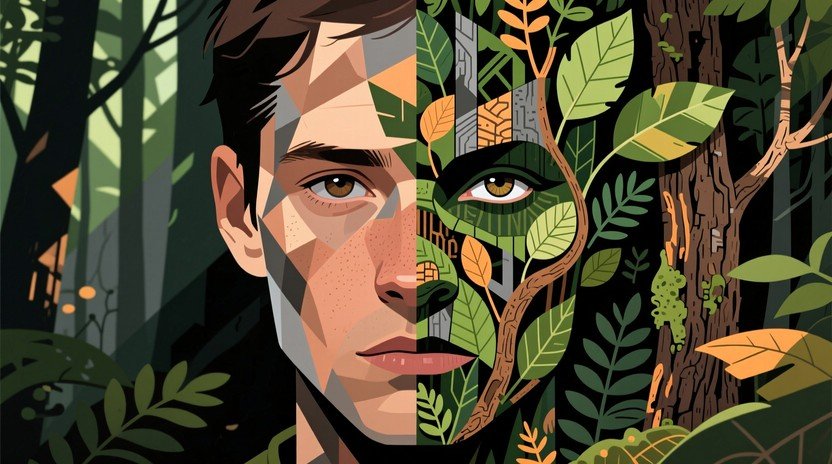
From the primal scream echoing through the canopies to the elegant swing across lush jungle vines, the story of Tarzan is more than just an adventure. It's a profound exploration of what it means to be human, to belong, and to reconcile the wild within us with the world outside. The concept of Tarzan's Identity and Wilderness isn't merely a backdrop; it's the very crucible in which his character is forged, presenting a timeless narrative that continues to blur the lines between civilization and nature, man and beast.
His saga, whether in Edgar Rice Burroughs's original novels or Disney's 1999 animated masterpiece, compels us to question our own origins, our place in the natural world, and the elusive quest for self-discovery.
At a Glance: Key Takeaways from Tarzan's Story
- A Fictional Icon: Tarzan is a wholly fictional character created by Edgar Rice Burroughs, not based on a single true story of a "feral child."
- Inspired by Mythology: His origin draws on ancient myths (like Romulus and Remus) and philosophical concepts (Rousseau's "Noble Savage").
- Unique Lineage & Intellect: Unlike real feral children, Tarzan possesses aristocratic birth, self-taught literacy, and exceptional intelligence.
- Disney's Thematic Depth: The 1999 film emphasized shared humanity, identity, and subtly engaged with colonial themes, marking a technical and narrative peak for traditional animation.
- Enduring Allure: The myth resonates due to themes of escape, nature's power, self-discovery, and the romantic ideal of a life unburdened by societal norms.
- Ethical Considerations: Critics point to the perpetuation of colonial stereotypes about Africa and its people inherent in the original narratives.
- Scientific Realities vs. Fiction: Tarzan's ability to learn complex language from books contrasts sharply with scientific understanding of isolated children.
The Genesis of a Legend: Where Man Met Myth in the Jungle
The image of Tarzan, King of the Apes, swinging effortlessly through a primeval African jungle, is etched into our collective consciousness. Yet, this powerful figure didn't spring from a true historical account. Instead, he was born from the imagination of American writer Edgar Rice Burroughs, first appearing in the serialized novel "Tarzan of the Apes" in 1912. Burroughs, a master storyteller, understood the timeless allure of a wild man, untamed and pure.
Weaving Ancient Threads into a New Narrative
Burroughs was a keen observer of human fascination with primal stories. He consciously drew inspiration from several powerful sources:
- The Romulus and Remus Myth: The tale of twin brothers, abandoned and raised by a she-wolf, who would go on to found Rome, provided a potent archetype of human potential nurtured by the animal kingdom. This myth lays the groundwork for Tarzan's adoption by a great ape.
- Jean-Jacques Rousseau's "The Noble Savage": This philosophical concept, popular in the 18th century, posited that humans are inherently good in their natural state but corrupted by civilization. Tarzan perfectly embodies this ideal, a man untouched by society's vices, living in harmony with nature.
- Rudyard Kipling’s "The Jungle Book": Mowgli, the boy raised by wolves in the Indian jungle, offered a more contemporary literary precedent for a child integrating into an animal society. Burroughs likely saw the universal appeal of such a narrative.
- European Exploration Narratives: The late 19th and early 20th centuries were filled with tales, often embellished, of European "discovery" in Africa. These narratives, while problematic today for their colonial undertones, provided a geographical and cultural backdrop that captured public imagination.
Feral Children: Fact, Fiction, and Tarzan's Distinction
While the concept of a child raised by animals is central to Tarzan's appeal, it's crucial to distinguish fiction from reality. Historically, cases of "feral children" exist, though they are heartbreakingly different from Burroughs's heroic vision. Individuals like Victor of Aveyron in 18th-century France or Oxana Malaya in Ukraine (discovered in the 1990s), who were raised in extreme isolation or with minimal human contact, often exhibited severe developmental delays, profound difficulties with language acquisition, and struggled to integrate into human society.
Tarzan, however, stands apart. He is not merely a feral child; he is John Clayton III, Viscount Greystoke, born of aristocratic English parents. This noble lineage is a critical element, endowing him with an innate intelligence and capacity for learning that sets him light years beyond real-world examples. His ape name, "Tarzan," meaning "White Skin," further underscores his unique, outsider status even within his adoptive family. This blend of primal upbringing and inherent nobility makes his story compellingly distinct.
The Core of Identity: Who is Tarzan, Really?
At its heart, Tarzan's narrative is a profound journey into identity. He is a man caught between two worlds, struggling to reconcile his biological heritage with his formative experiences. This internal conflict is what makes him such an enduring and fascinating character.
A Man of Two Worlds: The Burden and Blessing of Duality
Tarzan's identity is defined by a fundamental duality: he is a human raised by apes. This isn't just a plot device; it's the source of his strength and his greatest internal struggle. He possesses the physical prowess and instincts of the jungle, but also the innate curiosity and intellectual capacity of a human.
- The Ape Within: From his adoptive mother Kala, Tarzan learns survival skills, the intricate social dynamics of the Mangani (Burroughs's fictional great ape species), and the unspoken language of the wild. He is a hunter, a protector, and a fierce member of his ape family. His strength, agility, and keen senses are products of this upbringing.
- The Human Awakening: The discovery of his parents' cabin, their books, and rudimentary tools sparks an intellectual awakening. Through painstaking self-education, he teaches himself to read and write English, absorbing knowledge from the remnants of his biological family's world. This self-taught literacy is a crucial differentiating factor, emphasizing his unique intellectual prowess rather than just brute strength.
This duality means Tarzan is perpetually searching for where he truly belongs. He is too human for the apes, yet too wild for the humans. This journey of self-discovery forms the backbone of his appeal, a quest for a place where both aspects of his identity can coexist harmoniously.
Disney's Tarzan: A Modern Interpretation of Self-Discovery
Disney's 1999 animated film beautifully captured this identity struggle, making it central to its narrative. The film, which marked the end of Disney's Renaissance era, was celebrated for its technical mastery, strong emotional storytelling, and engagement with significant themes. Disney's "Tarzan" honed in on the universal motif of identity and the search for self, often visually represented by characters gazing at their reflections – a classic Disney trope.
The film highlights the shared humanity between two seemingly distinct worlds: Tarzan's anthropomorphic ape community and the arrival of the open-minded English scientists, Professor Archimedes Porter and his daughter, Jane. This theme is powerfully reinforced by Phil Collins’s iconic song “Two Worlds,” which encapsulates Tarzan’s internal conflict and his eventual embracing of both his human and ape families. Visual motifs, such as characters placing hands together, further symbolize the bridging of these worlds and the recognition of a common bond. It's in the world of Jane and Tarzan that this shared humanity truly blossoms, as two very different people find common ground and love.
While subtly addressing colonial themes through curiosity rather than outright dominance, the Disney film prioritized emotional connection. It presented Tarzan's journey as one of understanding and acceptance, not just of his human origins but of his right to define his own identity, regardless of where he was raised. This version underscored the idea that family is not solely defined by blood, but by love and loyalty.
Wilderness as Identity: The Jungle's Embrace and Its Lessons
The wilderness is far more than just a setting for Tarzan's adventures; it is a character in itself, shaping his identity, teaching him, and reflecting his most primal self. It is his home, his school, and his greatest challenge.
The Jungle as a Nurturing (and Brutal) Parent
For Tarzan, the African jungle is his true parent. It teaches him everything he knows about survival, hierarchy, and the delicate balance of life and death.
- Survival of the Fittest: The jungle is unforgiving. Tarzan learns to hunt, track, and evade predators from his ape family and through his own keen observations. This harsh environment hones his senses, making him extraordinarily alert and physically capable.
- Natural Law and Instinct: He grows up governed by the immediate, instinctual laws of the wild, where strength and cunning often determine survival. This imbues him with a raw honesty and directness, unburdened by the artifices of human society.
- A Deep Connection: Unlike a visitor, Tarzan is an integral part of the ecosystem. He understands its rhythms, its dangers, and its beauty in a way no outsider ever could. This intimate connection fosters a profound respect for nature.
The Wilderness as a Mirror for Self-Discovery
As Tarzan matures, the wilderness also acts as a mirror, reflecting his unique identity back to him. He sees his own difference from the apes, his lack of fur, his upright stance, his problem-solving capabilities. These subtle reflections fuel his quest for understanding who and what he is.
His journey through the trees and across rivers is not just physical; it's an internal exploration. Each encounter, each challenge, further solidifies his understanding of his place in the world and the unique blend of ape and human that defines him. The wilderness doesn't just train him; it initiates him into the profound mysteries of existence.
The Enduring Allure of the Wild Man: Why Tarzan Still Captivates
More than a century after his first appearance, Tarzan remains a cultural icon. His enduring appeal lies in the powerful, universal themes he embodies, speaking to deep-seated human desires and anxieties.
Escaping Civilization's Constraints
In a world increasingly structured, regulated, and urbanized, the idea of escaping to an untamed wilderness holds immense appeal. Tarzan represents ultimate freedom – freedom from societal norms, economic pressures, and the complex hypocrisies of modern life. He is unburdened by possessions, uncorrupted by power, and answerable only to the laws of nature. This fantasy of shedding the chains of civilization resonates deeply with anyone who has ever felt overwhelmed by the demands of modern existence.
The Power and Purity of Nature
Tarzan is a powerful reminder of nature's majesty and its capacity to sustain and shape life. He embodies a romanticized view of nature as pure, vital, and ultimately good. His story champions environmentalism before the term was widely used, highlighting the importance of living in harmony with the natural world rather than conquering it. He is nature's champion, a protector of its delicate balance, and a symbol of its untamed beauty.
The Quest for Self-Discovery and Identity
At its core, Tarzan's story is a universal tale of finding oneself. His journey from an orphaned infant to the King of the Apes, and then to a man grappling with his human heritage, mirrors our own lifelong quests for identity and belonging. He must ask: Where do I come from? Who am I, truly? Where do I belong? These are questions we all grapple with, making his struggles profoundly relatable.
Adventure, Romance, and Heroism
Beyond the philosophical underpinnings, Tarzan's narrative is, at heart, a thrilling adventure story. It's filled with danger, daring feats, exotic settings, and the classic "boy meets girl" romance, especially with Jane Porter. His superhuman strength, his mastery of the jungle, and his unwavering courage position him as a classic hero, someone who stands up for the weak and battles injustice, often literally wrestling with powerful beasts. This blend of escapism, heroism, and heartfelt emotion ensures his continued popularity across generations.
Unpacking the Myth: Misconceptions and Ethical Shadows
While Tarzan's story offers compelling themes, it's essential to critically examine its narrative, acknowledging both its fictional liberties and its problematic undertones, particularly in the context of our evolving understanding of history and science.
The Colonial Echoes: A Critical Lens
One of the most significant ethical concerns surrounding the Tarzan myth, especially in its original literary form, is its perpetuation of colonial stereotypes. Burroughs's Africa is often depicted as a dark, untamed continent, a blank slate awaiting discovery by white Europeans. The indigenous African characters, when they appear, are frequently portrayed as either savage, primitive, or subservient, lacking agency and depth.
Tarzan, the white aristocratic man, rises to become "king" of this wild domain, implicitly suggesting a natural order where European blood asserts dominance, even over nature and other human populations. While Disney's adaptation made efforts to soften these aspects, focusing more on shared humanity and less on overt racial hierarchies, the historical context of the myth remains relevant for critical discussion. It's a reminder that even beloved stories can carry embedded biases that require unpacking.
Scientific Realities vs. Hollywood Fantasy
Several aspects of the Tarzan myth, while crucial to its fantastical appeal, diverge sharply from scientific understanding:
- Vine Swinging: The iconic image of Tarzan swinging effortlessly from vine to vine is largely a cinematic invention. Great apes, while agile climbers, do not possess the anatomical structure, arm length, or shoulder mobility to swing like a pendulum for extended periods in the way depicted in films. Most apes brachiate (swing using their arms) for short distances, but it's not a primary mode of locomotion across vast distances.
- Language Acquisition from Books: Tarzan's ability to teach himself to read and write complex English solely from books, without any human interaction or auditory input, is highly improbable, if not impossible, according to developmental psychology and linguistics. Studies on feral children consistently highlight the critical period for language acquisition in early childhood. Without exposure to spoken language and social interaction during these crucial years, developing complex linguistic skills, especially literacy, is incredibly difficult, if not unattainable. Tarzan's literary prowess, while a cornerstone of his intellectual identity, is a testament to fiction's ability to bend reality for narrative power.
- Apes Raising Humans: While the Romulus and Remus myth and Kipling's Mowgli suggest it, the biological and social realities of non-human primates raising a human child are fraught with challenges. Differences in diet, communication, physical strength, and predatory instincts would make such an upbringing extraordinarily difficult and unlikely to result in a child thriving physically and intellectually as Tarzan does.
These fictional elements, while vital to the myth's entertainment value, serve as excellent points for critical thinking about how stories shape our perceptions of the natural world and human potential.
Beyond the Vines: What Tarzan Teaches Us About Ourselves
The narrative of Tarzan, in all its iterations, offers us more than just an exotic adventure. It provides a unique lens through which to examine fundamental questions about human nature, our relationship with the environment, and the complexities of identity.
Embracing Our Own "Wild" Sides
Tarzan's story encourages us to acknowledge and perhaps even embrace the "wild" within ourselves – the instincts, the primal connections to nature, the capacity for unadulterated emotion that modern life often seeks to suppress. He reminds us that true strength isn't just about physical prowess, but also about authenticity and living in harmony with one's true self.
The Power of Adaptability and Resilience
Raised in the most challenging of environments, Tarzan epitomizes adaptability and resilience. He learns, he evolves, and he thrives against all odds. His journey is a powerful testament to the human spirit's capacity to overcome adversity, navigate foreign landscapes (both physical and social), and find a way to belong.
Redefining Family and Belonging
Tarzan's most poignant lesson might be his redefinition of family. Despite his aristocratic bloodline, his true family is the community of apes who raised him. This challenges conventional notions of lineage and highlights the profound bonds forged through love, loyalty, and shared experience. His eventual bond with Jane further expands this concept, creating a unique cross-cultural "family." The deep connection to his adoptive family is what truly drives the world of Jane and Tarzan to understand and accept him.
Bridging Worlds, Not Just Surviving Them
Ultimately, Tarzan's identity is about bridging worlds. He is not just a survivor of two distinct environments; he is a synthesis of them. His story encourages us to look beyond superficial differences, to find common ground, and to understand that our identities are often complex tapestries woven from diverse experiences and influences. In an increasingly globalized and interconnected world, Tarzan's ability to traverse and integrate vastly different realities offers a powerful metaphor for connection and understanding.
Seeking Your Own Untamed Path
As you reflect on Tarzan's journey, consider what aspects of the wilderness – be it literal nature or the untamed parts of your own spirit – call to you. How do you navigate the conflicting demands of civilization and your authentic self? Tarzan's identity and wilderness serves not just as a thrilling tale, but as an ongoing invitation to explore your own boundaries, challenge your perceptions, and discover the unique blend of forces that make you who you are.